On this page
Changi is where a lot of people meet Singapore for the first time. Some are on a two-hour transit, some are flying in for a conference at Singapore EXPO, and some are landing with a new Employment Pass and a one-way ticket. The crypto questions differ a lot between those three groups, so this page is organised by situation, not by product.
Two facts first, because they save time. There is no Bitcoin or crypto ATM at the airport or anywhere in the Changi area. And the airport does not accept crypto for anything: Changi Pay, the wallet inside the Changi app, is a normal card-funded e-wallet.
At the airport: what exists and what doesn’t
Terminals 1 to 4 and Jewel have money changers, bank ATMs and every payment method you would expect. What they don’t have is any way to turn cash into crypto, or crypto into cash. Singapore had a few crypto ATMs in malls until January 2022, when MAS guidelines told licensed firms not to promote crypto through physical ATMs in public places, and the operators switched them off. None has returned, and none was ever at the airport as far as we can find. The story is in our Bitcoin ATM guide.
If someone at the airport, in a hotel lobby or in an online forum offers to swap your crypto for Singapore dollar notes, walk away. Cash-for-crypto swaps with strangers are a classic route for scam proceeds, and offering that as a business without a MAS licence is an offence under the Payment Services Act.
Opening an account as a foreigner
Every MAS-licensed platform must identify its customers. What you can open depends on where you live and which documents you hold.
| Your situation | What usually works | Documents to have ready | Our suggestion |
|---|---|---|---|
| Tourist or transit passenger | Your home-country exchange account | Whatever your home platform already holds | Don’t try to open a Singapore account for a short trip |
| New arrival, pass approved, no FIN card yet | Wait, or a platform that accepts passport sign-up | Passport, selfie check, proof of address under six months old | A bank statement is easiest once your local account is open |
| EP, S Pass, DP or other FIN holder with Singpass | Most MAS-licensed platforms | Singpass (MyInfo fills your details) | The smoothest route; same as citizens |
| Leaving Singapore for good | Update your address, or close and withdraw | New proof of address | Withdraw to a bank account you will keep |
Singpass is open to citizens, permanent residents and foreigners with a FIN aged 15 and above; the type of pass does not matter as long as it comes with a FIN. Once you have it, sign-up on a licensed app takes minutes because MyInfo fills in your name, ID number and address.
Without Singpass, the rules vary. Independent Reserve, for example, lets you scan a passport and complete a selfie check, and asks for proof of address that is less than six months old: a bank statement, a utility bill or a government document, but not a phone bill or a PO box. Other platforms may require a FIN. We could not confirm every platform’s policy for new arrivals, so read the help pages before you start, and expect the platform to ask about the source of your funds if you deposit a large sum from abroad.
You will also take the risk awareness assessment that MAS requires for retail customers, even if you traded for years elsewhere. The step-by-step version is in our guide to buying Bitcoin in Singapore, and the full register of licensed firms is on our MAS-licensed exchanges page.
Buy before you fly, or after you land?
For people relocating, this is the real decision. The short answer: you rarely need to rush.
Keep your home account for now
- No new KYC while you are still waiting for your FIN and lease
- Your history, tax records and cost basis stay in one place
- You can still move coins to a Singapore account later by on-chain transfer
Open a Singapore account once settled
- Free PayNow and FAST deposits from your new local bank account
- Supervised by MAS, with customer assets held in a statutory trust
- Your home platform may restrict you once your address is Singapore
Check your home platform’s terms. Many exchanges tie service to your country of residence and may freeze or close an account when you update your address. Moving coins between platforms is simple, but always send a small test first, check the network on both sides and keep the transaction records for tax purposes in both countries. Singapore does not tax capital gains, but your previous country may still have a claim on gains made while you lived there; our crypto tax guide covers the Singapore side.
Once you have a local bank account, our PayNow guide shows which platforms take free instant deposits.
Just landed and set up?
Open an account, verify your identity and test a small deposit before you move anything larger.
Using a crypto card abroad
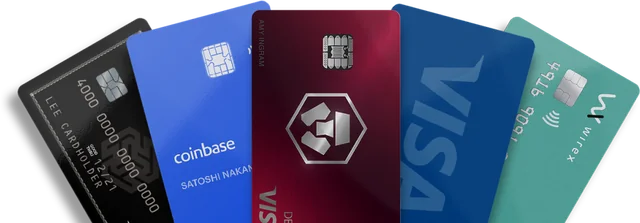
A crypto debit card can be handy on trips out of Changi, but read the fee table before you rely on one. Take Crypto.com, the most common in Singapore. For cardholders with a Singapore residential address, it does not allow ATM cash withdrawals in Singapore at all. Overseas withdrawals are allowed, with a free monthly allowance that depends on your card tier (S$200 on the entry-level Midnight card) and a 2% fee above it, plus whatever the local ATM operator charges.
Foreign-currency spending also changed on 1 September 2026. The Midnight card now charges a 2% FX fee, Ruby is free up to S$600 a month and Indigo or Jade up to S$1,200 a month, then 2%. A trip with a few thousand dollars of spending can cost more on a crypto card than on a good multi-currency bank card. Our crypto card guide has a calculator for exactly this comparison.
Tell your bank and your platform you are travelling
Logins from a new country can trigger security holds. Before a long trip, make sure two-factor authentication works without a Singapore SIM (an authenticator app is safer than SMS), and know how to reach support from abroad.
Hardware wallets in your hand luggage
A hardware wallet is a small electronic device, and you carry it like any other gadget. Singapore has no rule we could find that requires you to declare one. The device holds keys, not coins: if it is lost, stolen or confiscated, your crypto is safe as long as you still have the recovery phrase.
That phrase is the real treasure. Never pack it in the same bag as the device, never photograph it, and never type it into a phone or laptop, whatever an “airport Wi-Fi support” page claims. If you buy a device abroad, it counts towards your traveller’s GST relief like any other new purchase: S$500 if you were away 48 hours or more, S$100 if less. Buy only from the manufacturer or an authorised seller, never second-hand. More in our wallet guide.
The S$20,000 cash rule (and why crypto is different)
Singapore does not limit how much cash you bring in or take out, but it requires a report when the total of physical currency and bearer negotiable instruments exceeds S$20,000 or the foreign-currency equivalent.
- What counts
- Notes and coins in any currency, traveller’s cheques, bills of exchange, promissory notes, bearer bonds, money orders and postal orders
- How to report
- Electronically, through the MyICA app or the ICA website, within 72 hours before you arrive or depart
- Penalty
- Up to S$50,000 fine, up to three years’ jail, or both, and the cash can be seized
- Crypto
- Not listed in the official guidance. Coins are not physically carried; a hardware wallet or written phrase is not currency
Enforcement is real: multi-agency checkpoint operations regularly stop travellers with unreported cash, and outcomes range from warnings and composition fines to seizure for investigation. Our view: if you sold crypto and are carrying the proceeds as cash, you should not be. Move it by bank transfer, which leaves a clean record. We do not see crypto as a loophole either. Exchanges apply the travel rule to transfers of S$1,500 and above, and large transfers will be asked about.
Changi Business Park and Expo
Expo MRT station, on both the East-West and Downtown lines, serves Singapore EXPO and the offices of Changi Business Park. The Singapore FinTech Festival is held at EXPO Halls 1 to 6, this year from 18 to 20 November 2026, so the area fills with people from payments, banking and digital assets. Many booths will talk about crypto, tokenisation and stablecoins. Some will offer free tokens or QR codes for airdrops. Treat a QR code at a booth the way you would a link from a stranger: don’t connect a wallet holding real funds to it.
Business park staff who are new to Singapore usually have the same question as everyone else here: which local platform to use. Our exchange comparison lays out fees and licences side by side.
Other areas
Living a few stops west? Our Bedok guide is written for older first-time buyers and the families helping them.
Changi
Travellers and new arrivals: KYC as a foreigner and spending abroad.
Open area guideFrequently asked questions
Is there a Bitcoin ATM at Changi Airport or in Changi?
No. There is no crypto ATM in any terminal, at Jewel, in Changi Business Park or at Singapore EXPO, and none anywhere else in Singapore that we could verify. Public crypto ATMs were switched off in January 2022 after MAS guidelines. Ignore old listings that still show them.
Can I pay with crypto at Changi Airport?
Not that we could find. Changi Pay is an ordinary e-wallet in the Changi app, funded by card, and it does not hold or accept crypto. Airport shops and restaurants take cards, mobile wallets and cash.
I just arrived on an Employment Pass. Can I open an account on a Singapore exchange?
Usually yes, once you have your FIN and a local address. Pass holders with a FIN can register for Singpass, which most licensed platforms use for sign-up. Until then, some platforms accept a passport plus a recent proof of address, such as a bank statement or utility bill. Each platform sets its own rules, so check before you apply.
Can a tourist buy crypto in Singapore?
MAS-licensed platforms here are built for Singapore residents and generally ask for a local address. A short-term visitor is normally better off using an account from their home country, ideally set up and tested before the trip.
Do I need to declare my Bitcoin when I leave Singapore?
The cross-border reporting rule covers physical currency and bearer negotiable instruments above S$20,000, such as notes, coins and traveller’s cheques. The official guidance does not list crypto or hardware wallets. Your coins are on the blockchain, not in the device. If you carry over S$20,000 in cash, though, you must report it to ICA in advance.
Can I withdraw cash in Singapore with my Crypto.com card?
No, not if your account has a Singapore residential address. Crypto.com says these cardholders can only withdraw cash at ATMs overseas, with tier-based free allowances and a 2% fee above them.