On this page
Where you can actually pay with crypto in Singapore
Singapore has a reputation as a crypto hub, so people expect to see “Bitcoin accepted here” stickers on shop doors. You mostly won’t. Very few merchants take crypto directly, and the ones that do usually take stablecoins rather than Bitcoin.
What has grown instead are bridges. You pay in a token; somebody licensed converts it; the merchant receives Singapore dollars through a system they already use. From your side it feels like paying with crypto. From the hawker’s side it is just another GrabPay payment.
Under all of these sits the same regulatory logic. Anyone who converts or transfers tokens for customers needs a MAS licence under the Payment Services Act, so the conversion step is done by a licensed company, while the merchant stays a merchant. That keeps the shop out of the licensing regime and keeps volatility off its books.
OKX Pay at GrabPay QR codes, including hawker stalls
The most useful development for ordinary spending came on 30 September 2025, when OKX launched OKX Pay inside the OKX SG app. You hold USDT or USDC, open the Pay tab, scan any SGQR code that accepts GrabPay, and pay. The merchant receives the payment through GrabPay as normal.
That matters because SGQR is everywhere. GrabPay’s merchant network covers shops, cafés and restaurants, and a lot of hawker stalls display an SGQR code that includes GrabPay. If you are standing at a chicken rice stall in a Jurong or Tampines hawker centre with stablecoins on your phone, there is a reasonable chance you can pay with them. Check that the code shows the GrabPay logo among the accepted wallets.
Two practical points. You need an OKX SG account, which means passing KYC and the MAS risk awareness assessment, and you need to hold stablecoins there. We have not seen OKX publish a separate fee schedule for QR payments, so check the rate shown in the app before you confirm. Our OKX Singapore review covers the account itself, and the stablecoin guide explains how to get USDT or USDC with SGD.
Grab: crypto top-ups and tourist payments
Grab has two separate crypto stories, and they are easy to mix up.
Crypto top-ups for GrabPay. In March 2024 Grab added digital payment tokens as a way to top up the GrabPay Wallet in Singapore, through Triple-A. Five tokens were supported: Bitcoin, Ether, XSGD, USDC and USDT. Triple-A converted them into dollars, so Grab never held tokens on its own balance sheet. StraitsX noted that XSGD converted one-to-one, while other tokens could carry exchange spreads. Grab said at the time it would monitor adoption. We could not confirm whether the option is still live for all users in October 2026, so treat it as possibly withdrawn until you see it in your app.
Alipay+ to GrabPay, settled in XSGD. This one is aimed at visitors, not residents. After a memorandum of understanding at the 2023 Singapore FinTech Festival, StraitsX, Ant International and Grab built a system where tourists pay at GrabPay merchants using their home Alipay+ e-wallets, and the merchant is settled in XSGD, StraitsX’s Singapore-dollar stablecoin, with Purpose Bound Money controls. The tourist never touches crypto. The merchant gets near-instant settlement. It is a good example of blockchain rails used for plumbing rather than speculation.
Metro, Changi and the high street
In February 2025 Metro, the department store chain, announced it would accept stablecoins through dtcpay, starting at Metro Paragon on Orchard Road and Metro Woodlands, in store and online. Shoppers could pay in USDT, USDC and WUSD, with FDUSD planned. It was the first Singapore department store to do so. We could not find a later update on whether the rollout expanded or FDUSD went live, so ask at the counter before you rely on it.
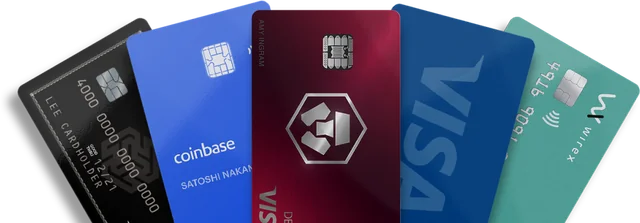
Changi Airport is the opposite case. Despite regular claims online, we found no crypto acceptance at Changi as of October 2026. Changi Pay is an ordinary digital wallet linked to cards, not a crypto product. Travellers who want to spend crypto are better served by a debit card; see our crypto card guide for the Singapore options and their FX fees.
Beyond these names, crypto acceptance in Singapore is scattered: some online shops through payment gateways, the odd boutique or service business. Be sceptical of any directory that lists hundreds of “crypto-friendly shops” without dates; many such lists date from 2021 and were never updated. Our Orchard area guide looks at shopping-belt spending in more detail.
Want to try paying with stablecoins?
Buy a small amount of USDT or USDC with a bank transfer, then make one low-value payment to see how the conversion looks.
Accepting crypto as a Singapore business
If you run a shop, a clinic, an online store or a consultancy, the question is not whether you can accept crypto, but whether you want the token or just the money. Almost every Singapore merchant who tries it chooses the money. Licensed providers receive the crypto, convert it, and pay you in SGD.
| Route | How it works | Licence position |
|---|---|---|
| HitPay with Triple-A | Switch on stablecoin checkout in HitPay; Triple-A locks the rate and converts; HitPay settles SGD | HitPay is an MPI but not licensed for DPT services and never holds crypto; Triple-A holds the DPT licence |
| Triple-A directly | Crypto checkout and invoicing, settled in fiat | Triple A Technologies listed as an MPI with DPT service |
| FOMO Pay | Crypto option alongside QR and card acquiring; fiat settlement | FOMO Pay listed as an MPI with DPT service |
| dtcpay | Stablecoin acceptance in store and online, as used by Metro | Operated by Digital Treasures Center, listed as an MPI with DPT service |
| Your own wallet | Customers send tokens to an address you control | No provider, but you carry price, security and AML risk yourself |
HitPay and Triple-A announced their tie-up in October 2025, opening stablecoin checkout to HitPay’s network of over 20,000 merchants, online and in store. HitPay is clear that stablecoins, while designed to hold their value, are still digital payment tokens with their own risks. FOMO Pay was one of the first firms to receive a MAS DPT licence and launched a crypto option for retailers in April 2022.
Taking crypto into your own wallet is possible but rarely sensible for a small business. You hold a volatile asset, you need to secure keys, and you cannot easily check who is paying you. If a customer pays with stolen or scam proceeds, you may be the one explaining to the police. Payment providers run blockchain screening for exactly this reason.
One line to stay on the right side of: if you start converting tokens for customers, holding them on others’ behalf, or offering to swap crypto for cash, you are no longer just a merchant. That is a regulated digital payment token service under the Payment Services Act, and unlicensed DPT business can be punished with a fine of up to S$125,000, up to three years in jail, or both. Our legal guide explains the licensing rules.
GST and accounting for merchants
How IRAS treats crypto payments for GST
Since 1 January 2020, exchanging digital payment tokens for fiat or other tokens is exempt from GST. When a customer uses tokens to pay you, IRAS disregards that use of tokens as a supply. Your own sale is unaffected: if you are GST-registered and the goods are taxable, you charge and account for GST as normal. IRAS’s example is a seller paid in Bitcoin for software, who must account for output tax on the software.
In practice that means your invoice and till receipt look exactly the same whether the customer paid by NETS, PayNow or USDC. You need a Singapore-dollar value for the sale. If your provider settles in SGD, use that settled amount and its rate; IRAS’s e-Tax guide on GST and digital payment tokens explains the valuation rules if you receive tokens directly, and we recommend reading it or asking your accountant rather than improvising.
For bookkeeping, fiat settlement keeps things simple: the provider’s report shows the SGD amount, fees and the original token. If you keep tokens on your balance sheet instead, you will need to track their value from receipt until you sell, and any gain or loss may be part of your business income for tax. IRAS’s income tax treatment of digital tokens differs from the GST treatment; our crypto tax guide covers the income side for individuals.
Purpose Bound Money and what comes next
A lot of what makes Singapore’s crypto payments interesting is happening one layer down. MAS’s Project Orchid explored a digital Singapore dollar and introduced Purpose Bound Money, a protocol that sets conditions on how an underlying digital currency can be used: only at whitelisted merchants, for example, or only for a voucher’s purpose. Trials covered government vouchers, commercial vouchers with Grab and StraitsX, and payouts. The Alipay+ to GrabPay system described above uses the same idea.
MAS has said there is no urgent need for a retail central bank digital currency and is focusing on wholesale settlement and regulated stablecoins instead. Its stablecoin framework, finalised in August 2023, created the “MAS-regulated stablecoin” label, and draft amendments to the Payment Services Act were consulted on in September and October 2026 but are not yet law. For shoppers, the likely result is more stablecoin payments through familiar apps, rather than a new national coin.
For now, the realistic way to pay with crypto in Singapore is through a licensed app, a stablecoin and an ordinary QR code. If you are setting that up from scratch, start with our guide to buying crypto with PayNow, then compare platforms in the exchange table.
Frequently asked questions
Can I pay with crypto at a hawker centre in Singapore?
Yes, at many stalls, without the hawker doing anything new. Since 30 September 2025, OKX Pay in the OKX SG app lets you pay with USDT or USDC by scanning any SGQR code that accepts GrabPay. The stall receives a normal GrabPay payment in Singapore dollars.
Can I top up GrabPay with crypto?
Grab launched crypto top-ups for the GrabPay Wallet in Singapore in March 2024 through Triple-A, supporting BTC, ETH, XSGD, USDC and USDT. We could not confirm whether the feature is still offered to all users in October 2026, so check the top-up options in your Grab app.
Can I pay with crypto at Changi Airport?
Not as of October 2026. We found no crypto acceptance at Changi Airport. Changi Pay is an ordinary digital wallet, not a crypto product. If you want to spend crypto while travelling, a crypto debit card is the practical route.
Do I need a licence to accept crypto payments for my shop?
Accepting payment for your own goods is generally not itself a regulated payment service, but converting, holding or transferring tokens for other people is. The simple route for most businesses is a licensed provider such as Triple-A or FOMO Pay, or HitPay’s integration with Triple-A, which convert to SGD and settle to your bank. Take advice if your setup is unusual.
Do I charge GST if a customer pays in Bitcoin?
Yes, if you are GST-registered and the goods or services are taxable. IRAS treats the customer’s use of digital payment tokens as payment as disregarded for GST, but your sale is still a taxable supply. IRAS’s own example is a seller paid in Bitcoin for software, who must account for output tax on the software.
Is crypto widely accepted in Singapore shops?
Not directly. Most real-world crypto spending runs through bridges: OKX Pay over GrabPay QR codes, crypto debit cards on the Visa network, or a payment provider at checkout. Only a small number of retailers, such as Metro, have announced direct stablecoin acceptance.