On this page
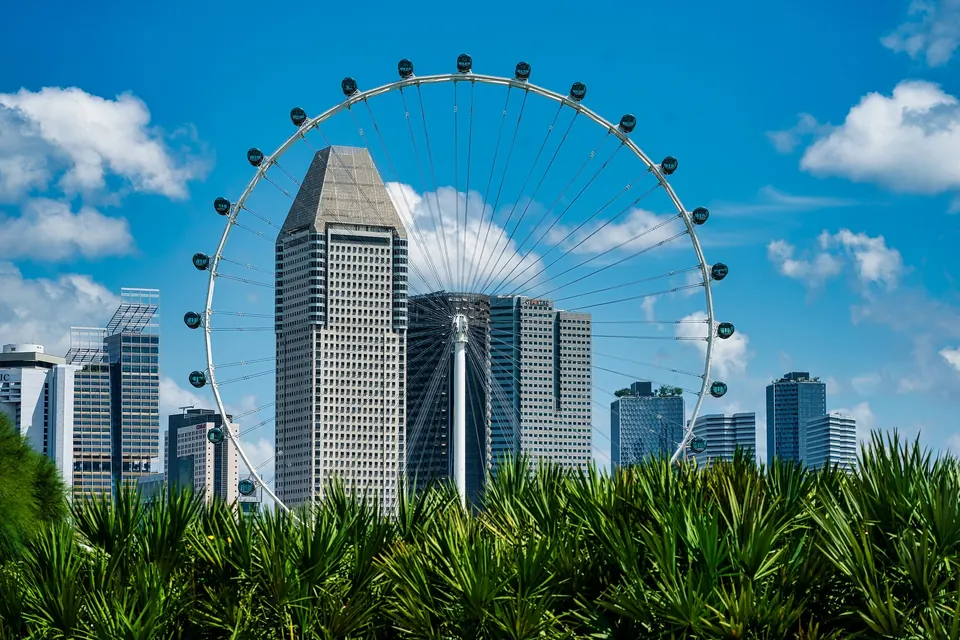
Punggol has changed fast. Ten years ago much of the waterfront was still being built; today the town is a dense ring of BTO estates around the LRT loops, Waterway Point and the Punggol Waterway, and since late 2024 it has had a second centre at Punggol Coast. Many households here are young couples who collected their keys in the last few years, often with small children, and often working in tech, healthcare or the public service.
That makes Punggol a natural place for a different kind of crypto question. Not “where is the nearest Bitcoin ATM” (there isn’t one), but “how do I actually understand this, and is holding my own wallet worth the risk?”
Punggol Digital District, briefly
The Punggol Digital District (PDD) is JTC’s business park and campus development by the water at Punggol Coast. Its first phase opened in stages from the third quarter of 2024. Transport came with it: Teck Lee LRT station opened in August 2024, Punggol Coast MRT, the new end of the North East Line, on 10 December 2024, and Punggol Coast Bus Interchange in June 2025.
The Singapore Institute of Technology moved its main campus here, and Prime Minister Lawrence Wong officially opened it in September 2025. SIT says the district is meant to be a precinct-level test-bed where industry partners co-develop and pilot real solutions. Early tenants include GovTech; banks and the Cyber Security Agency have announced moves, and we have seen different dates reported for UOB’s technology centre, so we leave the timeline open.
None of this makes PDD a “crypto hub”. We could not find any crypto exchange, counter or ATM there. But it does mean many people living nearby work with the technology underneath crypto, such as cryptography, security and payments, and they tend to want to understand how it works, not just press buy.
A first buy that fits a BTO budget
New-flat households carry real commitments: the housing loan, renovation, furniture, childcare. Crypto belongs after all of those, not alongside them. A sensible order is: emergency fund first, insurance and CPF needs covered, then a small, fixed amount of spare savings for higher-risk investing, of which crypto is only part.
CPF savings cannot be used for crypto, and they shouldn’t be. For the cash portion, a small monthly purchase on a MAS-licensed platform, funded by free PayNow, is the least stressful way to start. It removes the temptation to time the market, and the amount stays the same whatever the headlines say. Our recurring buy guide shows the fees over a year, and the step-by-step guide covers Singpass sign-up and the risk awareness quiz.
Which platform? Licensed ones such as Coinhako, Coinbase, Independent Reserve, OKX SG, Gemini and Crypto.com all take SGD by bank transfer. Our comparison table shows fees and coins side by side.
The self-custody ladder
“Not your keys, not your coins” is a popular slogan, and it has a point: several platforms that Singapore users trusted, such as Zipmex and Hodlnaut, froze withdrawals in 2022. But self-custody has its own failure mode, which is you. Lose the recovery phrase and nobody can help. We think of it as a ladder, climbed one rung at a time.
| Rung | Where coins sit | Who can lose them | Good for |
|---|---|---|---|
| 1 | MAS-licensed platform | The platform (assets held in statutory trust), or you via a hacked login | First months, small amounts |
| 2 | Phone wallet app | You, if the phone and phrase are lost or a fake app steals it | Learning to send and receive |
| 3 | Hardware wallet | You, if the phrase is lost or revealed | Amounts you’d hate to lose, held long term |
| 4 | Multi-signature setup | Only if several keys are lost at once | Larger holdings, technical users |
One question young families rarely ask, and should: if something happened to you, could your spouse get to the coins? On an exchange, your next of kin can approach the platform with the usual estate documents. With self-custody, there is no company to approach. If the recovery phrase is only in your head or hidden somewhere only you know, the coins are effectively gone. Write down, in plain language, which wallet you use and where the phrase is kept, and store that note somewhere your partner can find it, separately from the phrase itself. Keep the wallet device and the phrase away from small hands, too; a toddler-reset hardware wallet is fine, a lost paper phrase is not.
Most Punggol households never need rung 4, and that is fine. The important thing is never to skip rungs with real money. Our wallet guide compares devices and where to buy them safely in Singapore.
Practise on a testnet first
Before you move real coins to your own wallet, rehearse on a testnet: a copy of a blockchain whose coins are worthless by design. Bitcoin has public test networks (testnet and signet), and Ethereum has test networks such as Sepolia. Many wallet apps can switch to them in their settings, and free “faucet” websites give out test coins.
A good weekend exercise for a couple:
- Create a wallet on a testnet
Write the recovery phrase on paper. Both of you should know where it is kept.
- Receive test coins
Get coins from a faucet and check them in a block explorer.
- Send to the other person’s wallet
Notice the address check, the network fee and the waiting for confirmations.
- Delete the app and recover
Reinstall, restore from the paper phrase, and check the coins are back. This is the step that teaches the most.
Then repeat with a few dollars of real Bitcoin withdrawn from your licensed platform. Only after that should larger amounts follow.
Nobody legitimate needs your recovery phrase
Not a wallet company, not exchange support, not a “Telegram admin” helping with your testnet. Testnet coins also cannot be sold; offers to buy them or swap them for “mainnet airdrops” are scams. If you are unsure, check with the ScamShield Helpline on 1799.
Done the practice run?
Buy a small amount of Bitcoin on a licensed app, then withdraw a few dollars to the wallet you just tested.
Crypto careers and learning
Plenty of people in Punggol ask whether to move into crypto professionally. Singapore has 38 firms licensed by MAS for digital payment token services as of October 2026, plus banks and tokenisation projects such as MAS’s Project Guardian. The roles that keep growing are less glamorous than trading: compliance and anti-money-laundering, security, custody operations and payments engineering. Those skills are close to what many PDD employers already hire for.
For learning, the best resources are free: the Bitcoin and Ethereum developer documentation, block explorers and testnets. Be sceptical of paid “crypto academies”, signal groups and mentors selling courses; trading courses are a common entry point for investment scams. And be very careful with job offers. A “remote payments assistant” role that asks you to receive money into your account and forward it in crypto is mule recruitment. Since October 2025, people linked to mule activity can lose access to digital banking and new phone lines.
Meetups and events
We could not confirm any regular crypto meetup in Punggol itself. Singapore’s crypto events cluster in the city: TOKEN2049 took place at Marina Bay Sands on 7 and 8 October 2026, and smaller community events such as the Bitcoin Pizza Party at SQ Collective on Mohamed Sultan Road and the Bitcoin Walk at Marina Bay Financial Centre have run this year. Our Marina Bay guide covers the event scene. On the east side, the Singapore FinTech Festival runs at Singapore EXPO from 18 to 20 November 2026, a short ride from Punggol.
At any event, the same rules apply: no wallet connections to unknown QR codes, no sharing phrases, and no follow-up “private investment groups”. Our scams guide describes the patterns.
Other areas
Across the north, our Yishun guide deals with the other end of the journey: selling and cashing out cleanly.
Punggol
The Digital District, young first-time buyers and self-custody.
Open area guideFrequently asked questions
Is there a Bitcoin ATM in Punggol?
No. We found no crypto ATM at Waterway Point, Punggol Coast Mall, the Digital District or anywhere else in Singapore. Public machines were switched off in January 2022 after MAS guidelines. Punggol residents buy the same way everyone else does: online, on a licensed platform, funded by PayNow or FAST.
Can I use my CPF or HDB grant money to buy crypto?
No to CPF: crypto is not an approved CPF investment. And we would strongly advise against using money set aside for your flat, renovation or emergency fund. Crypto should come from spare monthly savings only.
Do I need a hardware wallet as a beginner?
Not on day one. Holding a small amount on a MAS-licensed platform is reasonable while you learn. Consider a hardware wallet once the amount would really hurt to lose and you have practised sending and recovering on a testnet or with a few dollars.
What is a testnet, and can I sell testnet coins?
A testnet is a practice copy of a blockchain where coins have no value, so you can learn to send, receive and recover a wallet without risking money. Testnet coins cannot be sold for real money; anyone offering to buy or sell them is running a scam.
Are there crypto meetups in Punggol?
We could not confirm any regular crypto meetup in Punggol as of October 2026. Most community events happen in the city, around Marina Bay and the CBD. Check event pages yourself, and be wary of “investment seminars” that end with a sales pitch.
Does working in the Digital District help me get a crypto job?
Being near tech employers helps with networking, but crypto firms in Singapore are mostly based in the CBD. Compliance, security and engineering skills are the most transferable. Treat any “job” that involves receiving and forwarding payments as money-mule recruitment.