On this page
Living next to the Causeway
Few places in Singapore are shaped by a border the way Woodlands is. The Causeway and Woodlands Checkpoint sit at the top of the town, and on weekday mornings the jams on the bridge are part of the local weather report. Thousands of people cross daily, Malaysians who work in Singapore and Singaporeans who live, shop or visit family in Johor Bahru.
The town itself is built around Woodlands Regional Centre. Woodlands MRT is an interchange between the North-South Line and the Thomson-East Coast Line, Causeway Point and Woodlands Civic Centre sit beside it, and the integrated bus interchange below handles the routes that run up to the checkpoint. One stop up the Thomson-East Coast Line, Woodlands North is where the RTS Link to Bukit Chagar in Johor Bahru will start. LTA’s target for passenger service is the end of 2026.
Woodlands also has one small, real link to crypto spending. In February 2025, Metro’s department store at Causeway Point, along with its Paragon store, began accepting USDT, USDC and WUSD through dtcpay, a payment service run by Digital Treasures Center, which holds a MAS licence. In a July 2026 SGX filing, Metro said it would close both stores when their leases expire, without giving a date. We could not confirm whether stablecoin checkout is still available at Causeway Point in October 2026, so ask at the counter before relying on it. Either way, it is a way to spend stablecoins, not to buy them.
Living this close to another country raises crypto questions that people in Tampines or Bedok rarely ask. Is it easier to buy over there? Can I bring coins back? Is crypto a cheaper way to move ringgit and Singapore dollars around? And why do so many scam messages mention Johor?
Is there a crypto ATM in Johor Bahru?
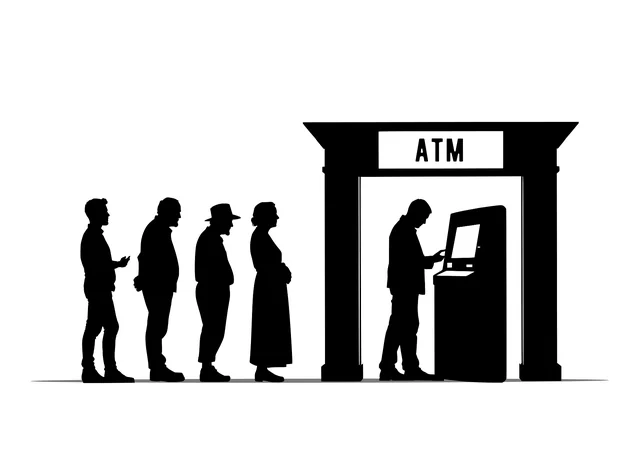
This is the question we get most from the north. The idea is understandable: Singapore’s machines disappeared, Malaysia is a short bus ride away, so perhaps the machines simply moved across the water. They did not.
- February 2014Singapore’s first Bitcoin ATM goes into a bar on Boat Quay. Others follow in malls over the next few years.
- July 2020Malaysia’s Securities Commission warns the public that it has not authorised any entity to operate crypto ATMs. It says operators are effectively running a digital asset exchange, which must be registered with the SC.
- January 2022MAS guidelines tell licensed providers not to promote crypto through physical ATMs and other public channels. Singapore’s operators switch their machines off within days.
- October 2026We find no credible report of a public crypto ATM in Singapore and no evidence of an authorised one in Johor Bahru.
Directory sites sometimes still show pins in JB, just as they still show machines in Singapore malls. We could not confirm any of them, and an unregistered machine is exactly what the SC told Malaysians to avoid. If you are crossing the Causeway with cash to look for one, you are taking on the risks of carrying cash, of unknown fees, and of dealing with an operator no regulator stands behind. Our Bitcoin ATM guide explains what replaced the machines on this side.
Two regulators, two rulebooks
Singapore and Malaysia both allow people to buy crypto, and both require the platforms to be licensed or registered. The details differ, and an account on one side does not give you the protections of the other.
| Rule | Singapore | Malaysia |
|---|---|---|
| Regulator | Monetary Authority of Singapore (MAS) | Securities Commission Malaysia (SC) |
| What platforms need | Major Payment Institution licence for digital payment token services, under the Payment Services Act | Registration as a Recognized Market Operator running a digital asset exchange |
| Where to check | MAS Financial Institutions Directory; Investor Alert List | SC list of registered digital asset exchanges; SC Investor Alert List |
| Crypto ATMs | None since January 2022 | None authorised (SC, July 2020) |
As of the SC’s list dated 20 July 2026, five firms were registered to run digital asset exchanges in Malaysia: HATA Digital, Luno Malaysia, MX Global, SINEGY DAX and Kinetic DAX. Two details are worth knowing. Luno left Singapore in June 2023 but still operates in Malaysia, so a Luno account opened in Malaysia is a Malaysian account, not a Singapore one. And Tokenize, one of the first three exchanges the SC registered in 2019, does not appear on the current list; its Singapore business also closed in 2025 after MAS refused it a licence. Lists change, so check the register on the day.
On the Singapore side, our list of MAS-licensed exchanges shows every firm currently licensed, and the legal guide explains what the licence means for you.
Earning SGD, spending MYR
Many cross-border workers earn in Singapore dollars and spend much of it in ringgit. It is tempting to think crypto could be a cheaper bridge: buy USDT in Singapore, sell it in Malaysia, skip the money changer.
In practice the sums rarely work. You pay a spread to buy, a network fee to withdraw, a spread to sell on the Malaysian side and a fee to withdraw ringgit. Each step adds identity checks on both platforms. The price of a stablecoin against ringgit can also drift from the official exchange rate. A licensed remittance service or a bank transfer is simpler, and it leaves a record your bank understands.
There is also an account-safety reason to keep things simple. Banks watch for patterns that look like money laundering, and a stream of transfers to and from crypto platforms in two countries can draw attention. If you hold crypto as an investment, buy and sell it on one licensed platform and withdraw to your own bank account in your own name. Our cash-out guide explains how to avoid account freezes.
Moving crypto across the border
Crypto does not physically cross the Causeway. Coins in your own wallet are the same whether your phone is in Woodlands or Johor Bahru. What crosses a border is a transfer between platforms, and that is where the rules apply.
- Singapore’s cross-border cash reporting rule covers physical currency and bearer negotiable instruments above S$20,000. We found no equivalent declaration requirement for crypto, but cash you withdraw to carry across is covered.
- Under MAS’s anti-money-laundering rules, licensed platforms apply the travel rule: on transfers above S$1,500 they collect and pass on sender and recipient details. Expect questions when you withdraw to a platform abroad.
- Send a small test transaction first and double-check the network. A token sent on the wrong network to a Malaysian exchange may not be recoverable.
- Keep records of every transfer. Tax rules differ in Singapore and Malaysia, and if you are tax resident in Malaysia, its rules apply to you. Our tax guide covers only Singapore.
If you mainly hold stablecoins, the USDT and stablecoin guide explains which networks licensed Singapore platforms support.
Buy on this side, in your own name
Open a licensed account, verify with Singpass and fund it by PayNow. No cash, no meet-ups, no trip to JB.
Scams aimed at cross-border commuters
Scammers follow people’s routines, and the Causeway is a routine. In September and November 2025, the Singapore Police Force warned about a fake “Johor-Singapore Housing Subsidy” scheme promoted on Facebook and WhatsApp under names such as “Free Homes Across the Causeway”. Some ads used forged documents bearing the signatures of both prime ministers. Victims were asked for NRIC details and then for “legal and stamp duties”. By November, police had at least 21 reports and losses above S$1 million.
Other patterns we see in the north are familiar from the rest of Singapore, with a cross-border twist: callers posing as police or officials from the other country, “investment mentors” who move the conversation to a foreign app, and offers to swap cash for USDT at a bus stop or near the checkpoint. SPF has repeatedly pointed out that foreign police cannot investigate in Singapore or instruct you to move money.
Three rules for the north
Never hand over cash for crypto to someone you met online. Never move money because a caller says they are police or a government officer, from either country. And if a scheme mentions the Causeway, the RTS Link or Johor and asks for payment in crypto, check it with the ScamShield Helpline on 1799 before you do anything.
Losses to scams in Singapore were S$913.1 million in 2025, and about a fifth of that was in cryptocurrency. Our crypto scams guide explains how to report one and what recovery is realistic.
Other areas
Woodlands is the only area guide that deals with a land border, but the west has its own crossing at Tuas. The Jurong East guide covers that, and Yishun, a few stops down the North-South Line, covers cashing out cleanly.
Woodlands
Next to the Causeway: why Johor has no crypto ATMs either.
Open area guideFrequently asked questions
Is there a Bitcoin ATM in Woodlands?
No. We found no public Bitcoin or crypto ATM at Causeway Point, Woodlands Civic Centre, the checkpoint or anywhere else in Woodlands. All public crypto ATMs in Singapore were switched off in January 2022 after MAS guidelines on public marketing, and we found no credible report of any returning as of October 2026.
Can I cross to JB and use a Bitcoin ATM there instead?
We do not recommend it. Malaysia’s Securities Commission said on 8 July 2020 that it had not authorised any entity to operate crypto ATMs, and that operators would need to be registered as a digital asset exchange. We found no evidence of an authorised machine in Johor Bahru. An unregistered machine leaves you with no protection if something goes wrong.
Can a Singapore resident open an account on a Malaysian crypto exchange?
Malaysia’s registered exchanges are set up for the Malaysian market, and each sets its own rules on who it accepts. Check the platform’s eligibility terms and the SC’s register before you try. For most Singapore residents a MAS-licensed platform funded by PayNow is the simpler route.
Do I need to declare crypto when I cross the Causeway?
Singapore’s cross-border cash reporting rule applies to physical currency and bearer negotiable instruments above S$20,000. We found no equivalent declaration requirement for crypto held in a wallet or on an exchange. Large transfers between platforms are still subject to identity checks and the travel rule, and Malaysian rules are a separate matter.
Is it cheaper to send money to Malaysia through crypto?
Usually not, once you add the buy spread in Singapore, the network fee, the sell spread in Malaysia and the withdrawal fee. A licensed remittance service or bank transfer is simpler and leaves a clean record. If someone insists crypto is the only way to pay them, treat that as a warning sign.
Will the RTS Link change anything for crypto?
Not directly. It will make the trip from Woodlands North to Bukit Chagar about five minutes once it opens (LTA targets the end of 2026), but crypto rules on each side stay the same. Expect scammers to use the new link in their stories, as they used the fake Johor-Singapore housing scheme in 2025.