On this page
Verdict at a glance
CEX.IO is one of the oldest exchanges still trading. It started in 2013, says it has more than 15 million registered users, and has built a set of licensed entities across the United States, the United Kingdom and Europe. For a Singapore resident, it does two things better than most local apps: it lets you buy with a debit card, Apple Pay or Google Pay in a couple of minutes, and it gives you access to a much longer list of coins.
The catch is plain. CEX.IO is not licensed by MAS. You are a customer of a foreign company, the Payment Services Act protections do not apply, and there is no PayNow or FAST route for Singapore dollars.
- Founded
- 2013
- Registered users
- 15M+ (company figure)
- Licences
- “30+ licences and registrations” per CEX.IO; US FinCEN MSB and state money transmitter licences; UK entity CEX.IO Markets UK Ltd (FRN 1007192)
- MAS status
- Not licensed; not on the MAS register as of 20 Oct 2026
- SGD funding
- Visa/Mastercard, Apple Pay, Google Pay, bank wire, crypto. No PayNow or FAST found
- Spot fees
- Maker 0.15% / taker 0.25% at entry tier (third-party data)
- Coins
- 300+ (company claim)
- Best for
- Card buyers and people who want a wide coin list
Why it tops our list
Our ranking is not a quality score. It reflects how many common needs a platform covers well for a first-time buyer in Singapore, and CEX.IO covers the widest spread.
The first reason is cards. MAS-licensed platforms are barred from accepting locally issued credit cards, and many offer only bank transfers. For someone who wants to buy a small amount right now, with the card already saved in their phone, CEX.IO is one of the simplest routes available. Apple Pay and Google Pay make the first purchase feel like any other online payment.
The second is range. Local licensed apps list a curated set of assets, often well under a hundred on the smaller ones. CEX.IO says it supports more than 300 coins. If you want a token that Coinhako or Coinbase Singapore does not list, this is where a lot of people end up.
The third is track record. An exchange that has run continuously since 2013, through the 2014 Mt. Gox collapse, the 2018 bear market and the 2022 failures of FTX and several lenders, has a history you can actually look at. That is not a guarantee, but it counts for something in an industry where many names last only a cycle.
We still rank six MAS-licensed platforms directly below it, and for many readers one of those will be the better choice. If a local licence is your first requirement, skip to the alternatives.
Strengths and weaknesses
What we like
- More than a decade of continuous operation
- Regulated entities in the US and UK, plus a European entity
- Fast card, Apple Pay and Google Pay purchases
- A coin list several times longer than most local apps
- Order-book trading with maker and taker pricing for people who want it
- Published PCI DSS compliance documentation for card handling
Watch out for
- Not licensed by MAS; no statutory trust or local regulator for your account
- No PayNow or FAST, so SGD funding costs more than on local platforms
- Card fees of several percent make it expensive for large or regular buys
- New-customer limits of US$1,000 a day and US$3,000 a month
- Fee figures are hard to find on the official site; check the order screen
Fees and limits
This is the part of CEX.IO we found least transparent. Its fee-schedule and limits pages, when we checked on 20 October 2026, showed the limit rules but not the trading percentages. The numbers below come from third-party fee tables and press reviews. Treat them as a guide and confirm the exact cost in the order preview before you confirm.
| Item | Reported cost | Status |
|---|---|---|
| Spot maker fee, entry tier | 0.15% | Third-party data |
| Spot taker fee, entry tier | 0.25% | Third-party data |
| Card purchase fee | 2.99–4.99% | Third-party data |
| New-customer card limit | US$1,000/day, US$3,000/month | Official limits page |
| Crypto deposits | Network fee only, typically | Check per coin |
What does that mean in Singapore dollars? On a S$1,000 card purchase, a 2.99% fee is about S$30 and a 4.99% fee about S$50, before any foreign-currency charge your bank adds if the payment is processed in another currency. Compare that with funding a MAS-licensed order-book exchange by PayNow for free and paying a taker fee of around 0.10%, which is about S$1. On S$100 the difference is a few dollars and convenience may win. On S$10,000 it is hundreds.
The order book is the cheaper way to use CEX.IO. If you deposit once and then trade with limit orders, the maker fee applies instead of the card fee. Our cheapest way to buy Bitcoin guide has a calculator that shows the full cost of each route.
Paying from Singapore
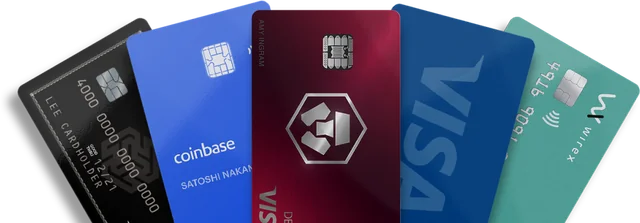
CEX.IO accepts Visa and Mastercard cards, Apple Pay, Google Pay, bank wires and crypto transfers. For most Singapore users, a debit card is the practical choice. A locally issued credit card is a different matter: the MAS ban applies to licensed platforms, not to CEX.IO, but your bank may still decline the payment or treat it as a cash advance with its own fees and interest. Ask your bank before you try.
We could not find a PayNow or FAST deposit route for Singapore residents. A bank wire is possible, but international wires from DBS, OCBC or UOB usually carry sending fees and take longer, so they only make sense for larger amounts. If you already hold USDT or another coin elsewhere, a crypto deposit is the cheapest way in.
Cashing out works the same way in reverse: to a card where supported, by wire, or by sending coins to another platform and selling them for SGD there. Many Singapore users do exactly that, moving coins to a licensed app and withdrawing by FAST. Our guide on selling crypto in Singapore covers that route and how to avoid bank account freezes.
Want the card route?
Sign up, complete identity verification and try a small card purchase first, so you see the exact fee before committing more.
Licences and safety
CEX.IO describes itself as holding “30+ licences and registrations” worldwide. Here is what we could connect to specific entities, and what we could not.
- 2013CEX.IO launches as an exchange.
- 2015The US business registers with FinCEN as a money services business. CEX.IO says its US office went on to obtain money transmitter licences covering 30+ states.
- 2019CEX.IO receives a Gibraltar distributed ledger technology licence, as reported at the time. We could not confirm its current status on a primary source.
- 2020CEX.IO applies for a licence in Singapore under the Payment Services Act. It does not appear on the MAS register as of October 2026.
- 2023A Lithuanian entity is opened and registered as a virtual asset service provider, with its own money-laundering reporting officer, according to CEX.IO.
- TodayThe UK entity, CEX.IO Markets UK Ltd, carries FCA firm reference number 1007192. The legal page also lists CEX.IO Europe, S.L. for the EEA, CEX.IO Corp. for the US and CEX OVRS LLC for other jurisdictions.
We could not confirm from CEX.IO’s public pages which of those entities contracts with Singapore residents. Check the terms you are shown at sign-up; the entity named there is the one you are dealing with.
What “not MAS-licensed” means for you
MAS-licensed platforms must hold customer assets in a statutory trust separate from the company’s own, assess whether retail customers understand the risks, and answer to a Singapore regulator. None of that applies to an account with an overseas exchange. If something goes wrong, a dispute would follow the law of the jurisdiction in the terms you accepted. Keep balances small and withdraw long-term holdings to a wallet you control.
On security, the legal page links to PCI DSS documentation for card handling and to AML, KYC and anti-fraud policies. We did not find a proof-of-reserves report on the pages we checked. Use an authenticator app rather than SMS for two-factor authentication, whitelist withdrawal addresses, and be suspicious of anyone who contacts you claiming to be CEX.IO support. The scam patterns behind Singapore’s S$182.2 million in crypto losses in 2025 are covered in our crypto scams guide.
Who it suits
A good fit if you want to buy a modest amount quickly with a debit card or Apple Pay, you want coins that local apps do not list, or you already trade on international order books and value a long track record. Experienced users often keep a core position on a licensed local platform and use CEX.IO for the extras.
Look elsewhere if you want MAS protection, you plan to buy every month by PayNow, or you are moving large sums. For regular SGD buying, card fees will cost you far more over a year than an order-book platform funded by bank transfer. For S$50,000 and up, an OTC desk is the better route.
Alternatives
If the missing MAS licence is a deal-breaker, these licensed platforms cover the same ground in different ways:
- OKX SG: free PayNow and FAST, low order-book fees, the cheapest all-round alternative.
- Coinhako: Singapore-born, debit card and GrabPay funding, simple app for beginners.
- Crypto.com: debit card and Apple Pay funding inside a MAS-licensed app, plus a Visa card.
- Independent Reserve: PayNow up to S$200,000 per deposit and an OTC desk for larger orders.
For the full side-by-side view, see our comparison of the best crypto exchanges in Singapore, or check any name against the list of MAS-licensed exchanges.
Frequently asked questions
Is CEX.IO legal in Singapore?
Using it is not illegal for an individual. CEX.IO is not licensed by the Monetary Authority of Singapore and does not appear in the MAS Financial Institutions Directory, so it serves Singapore residents from abroad. It is also not on the MAS Investor Alert List as of October 2026. What you give up is the protection of the Payment Services Act, such as the statutory trust over customer assets that MAS-licensed platforms must provide.
Is CEX.IO safe?
It has operated since 2013, which is a long record in this industry, and it runs regulated entities in the United States, where it has been registered with FinCEN as a money services business since 2015 and holds state money transmitter licences, and in the United Kingdom. Those licences do not protect a Singapore customer the way a MAS licence would. Use two-factor authentication, keep only what you are actively using on the exchange, and move long-term holdings to your own wallet.
Can I deposit SGD with PayNow on CEX.IO?
We found no PayNow or FAST option for Singapore residents. You fund with a Visa or Mastercard card, Apple Pay, Google Pay, an international bank wire or a crypto transfer. If PayNow matters to you, a MAS-licensed platform such as OKX SG or Independent Reserve is the better fit.
What are CEX.IO’s fees?
Third-party fee tables put spot trading at 0.15% for makers and 0.25% for takers at the lowest volume tier, with card purchases reported at roughly 2.99% to 4.99%. CEX.IO’s own pages did not show these numbers when we checked, so confirm the exact charge on the order screen before you pay.
How much can I buy with a card as a new customer?
CEX.IO’s limits page says customers in their first three months after identity verification have a maximum of US$1,000 a day and US$3,000 a month. Standard limits for your payment method apply after that.
Does CEX.IO have a Singapore licence application?
CEX.IO applied under the Payment Services Act in 2020, as reported at the time. As of 20 October 2026 it is not listed as a licensed Major Payment Institution, and we found no public update on that application.